
Ever wondered how to shoot film at night, and successfully? Keep on reading as our brand ambassador Elliot Masters (@the_light_session) shares his top tips on shooting film at night, very generous knowledge and sample images from his own shoots.
Neon-soaked scenes, moody tones and an air of mystery: Shooting film at night can be glorious. Additional camera gear such as a tripod or a light meter can be really helpful with getting the right amount of extra light needed to create photos at night.
But what if, like me, you’re super lazy and like to keep your gear light? The last thing I want is to carry a tripod around town at 11 pm, drawing attention to myself, and as mentioned before, I’m very lazy and don’t want to carry extra things.
Here are ten ways I get around all this.
How To Shoot Film At Night (Without Overcomplicating It!)
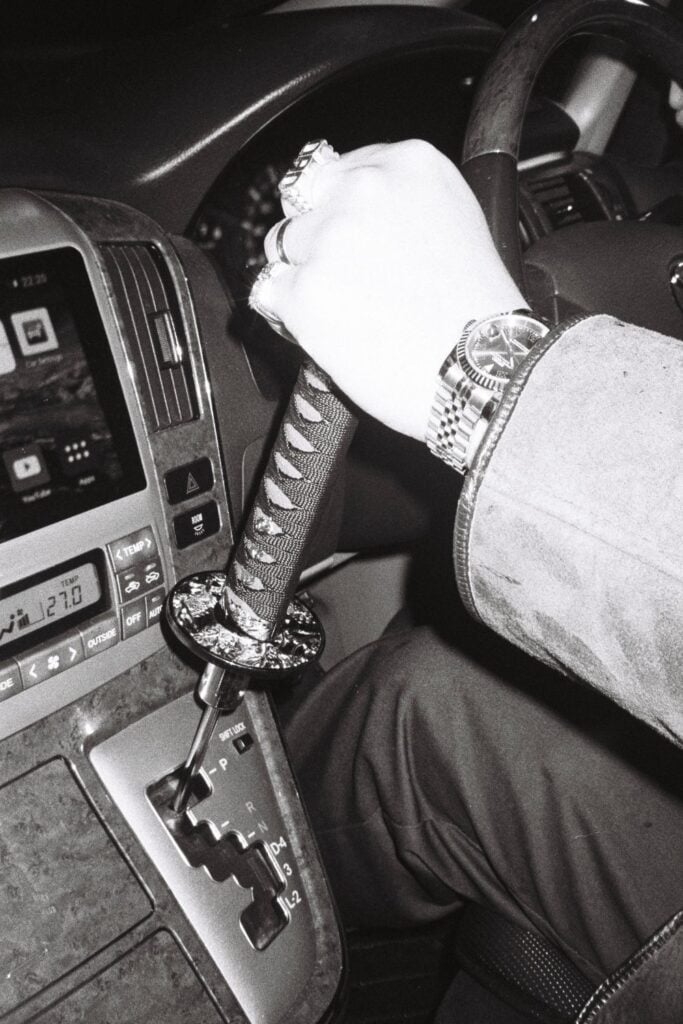
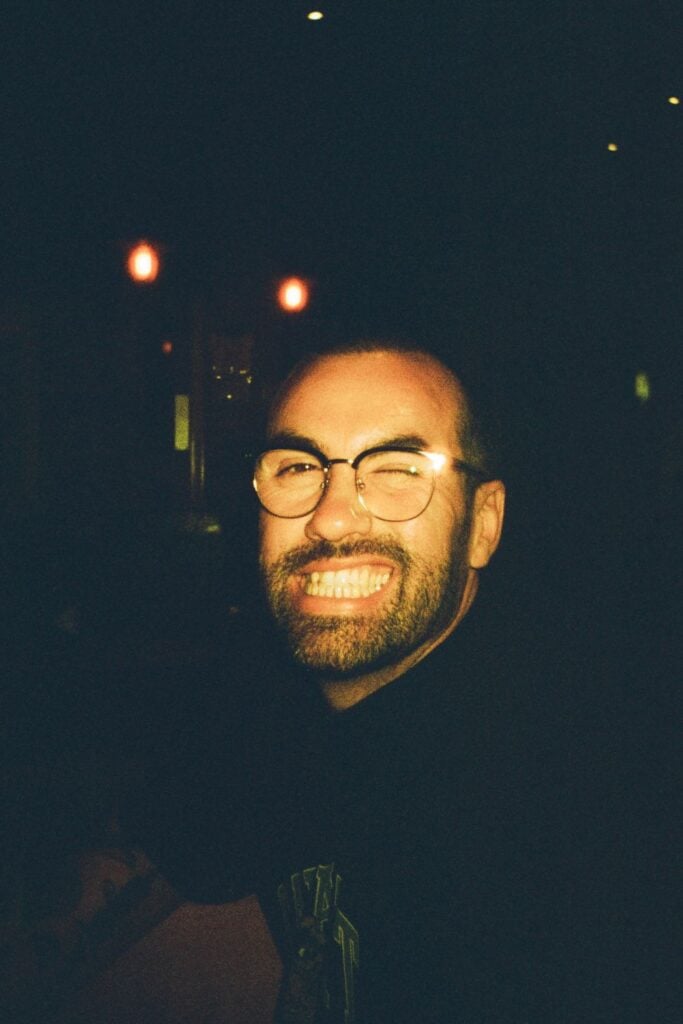
1. Use a Flash
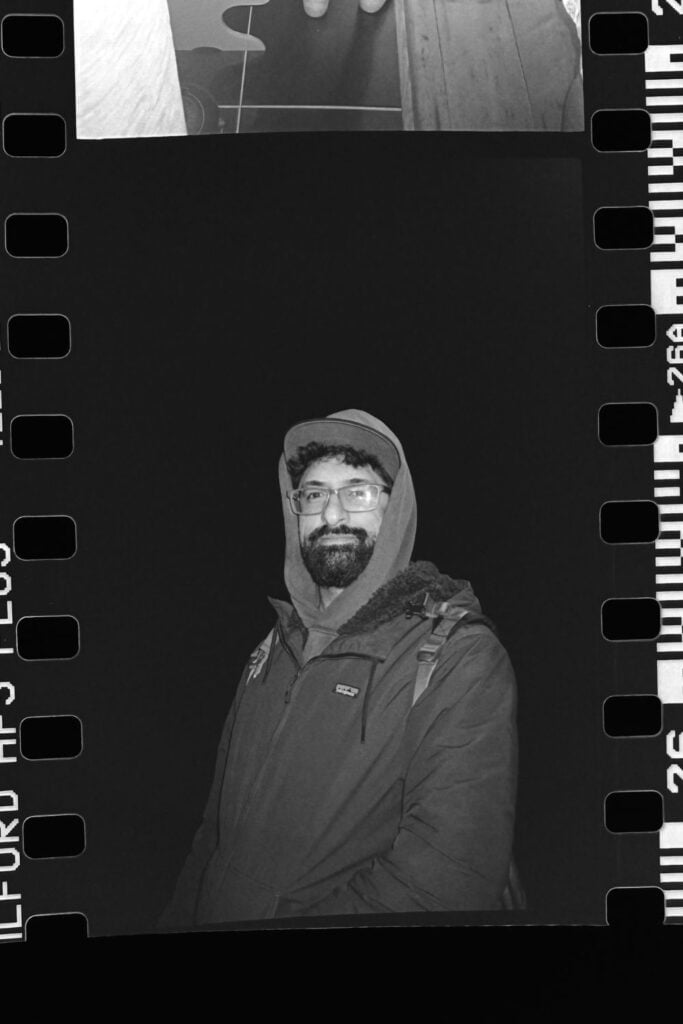
The easiest and most obvious solution of all: use a flash.
A big upside is you don’t have to worry too much about the speed of the film in your camera. That roll of Harman Phoenix 200 you were shooting in the day will be great for some candid night flash portraits, giving that retro 90’s night out look.
Black and white film can look amazing paired with a flash too. The only downside is you will definitely draw attention to yourself.
2. Use Fast Film!
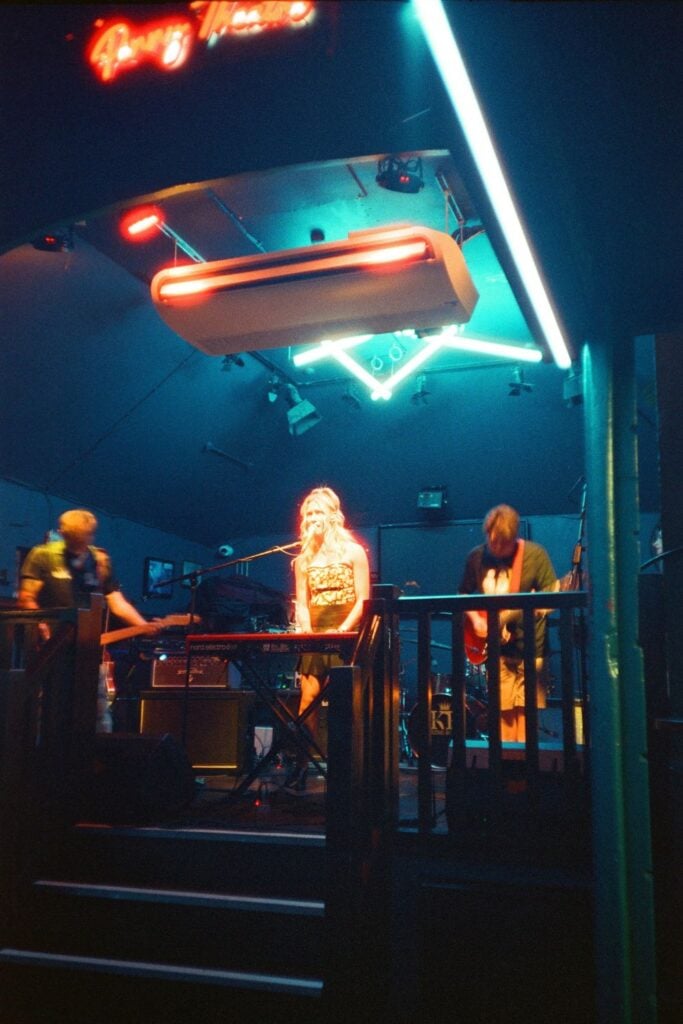
The higher the ISO rating of the film you’re using the more sensitive to light it will be. Shooting an 800 speed film such as Kodak Ektacolor 800 will enable you to shoot faster shutter speeds compared to a slower film like Kodak Gold 200.
Black and white film stocks such as Ilford Delta 3200 will be even faster still.
In my experience, all 800 speed colour films currently available work well in the day if you rate them at 400 ISO. This gives you another element of flexibility if you don’t think you’ll finish the roll, but want to keep shooting the next day.

3. Push Your Black and White Film!
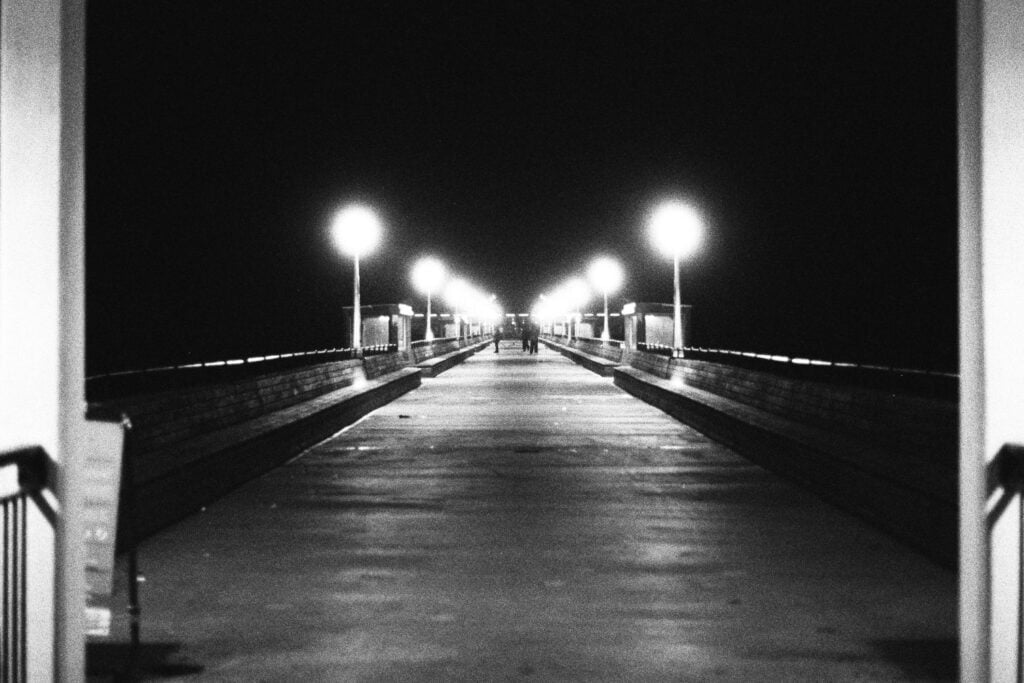
Pushing your black and white film by rating it at a higher ISO and telling your lab (filmprocessing.co.uk of course – just let them know in the notes when ordering online) to adjust development accordingly can really help you out when shooting a medium speed film stock such as Ilford HP5+.
You will need a camera with either adjustable ISO settings or an exposure compensation dial. For more information about how to do this, read my previous blog on pushing black and white film.
4. Look for Light Sources
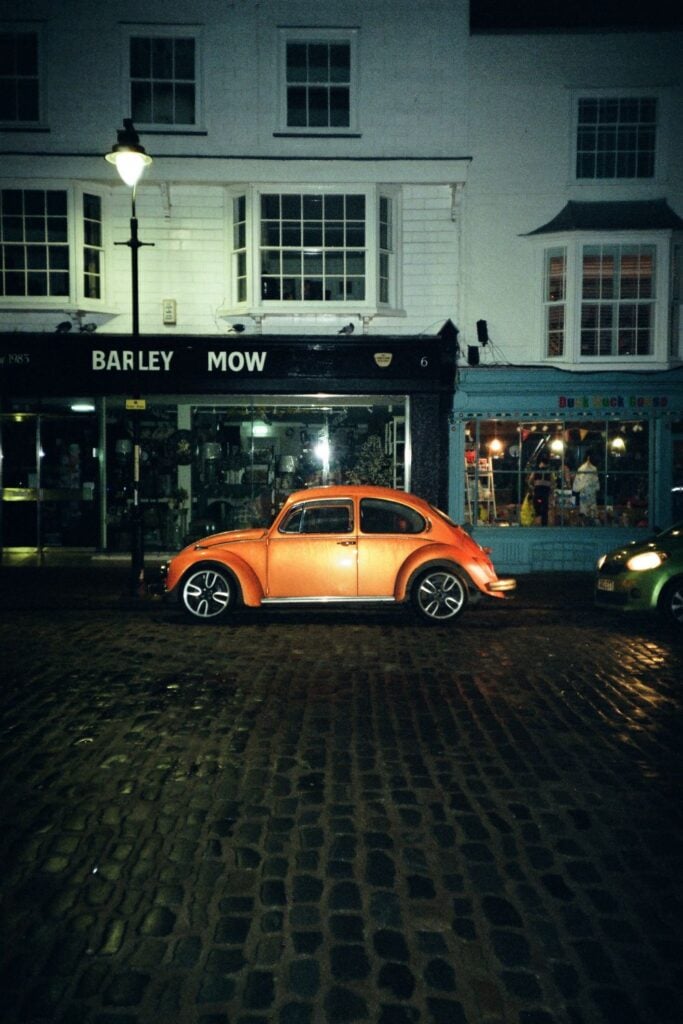
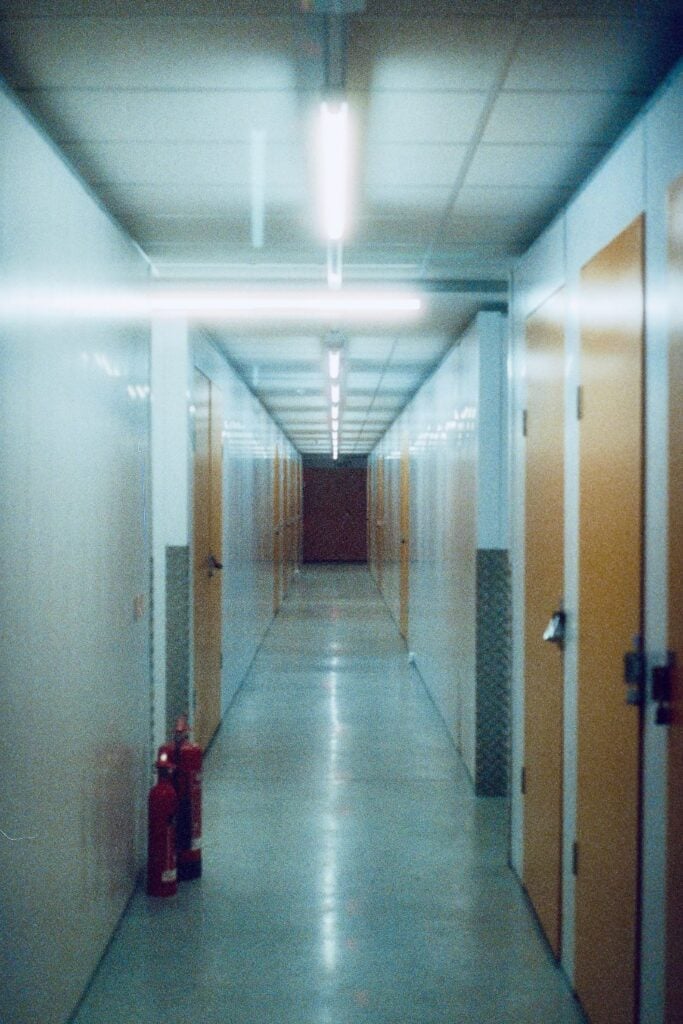
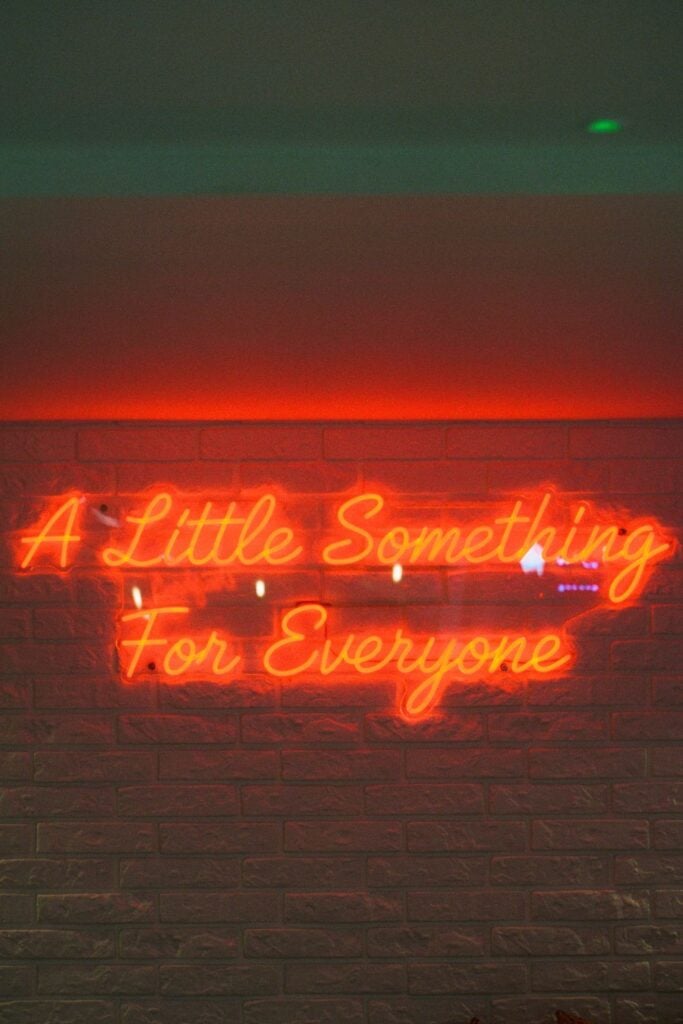
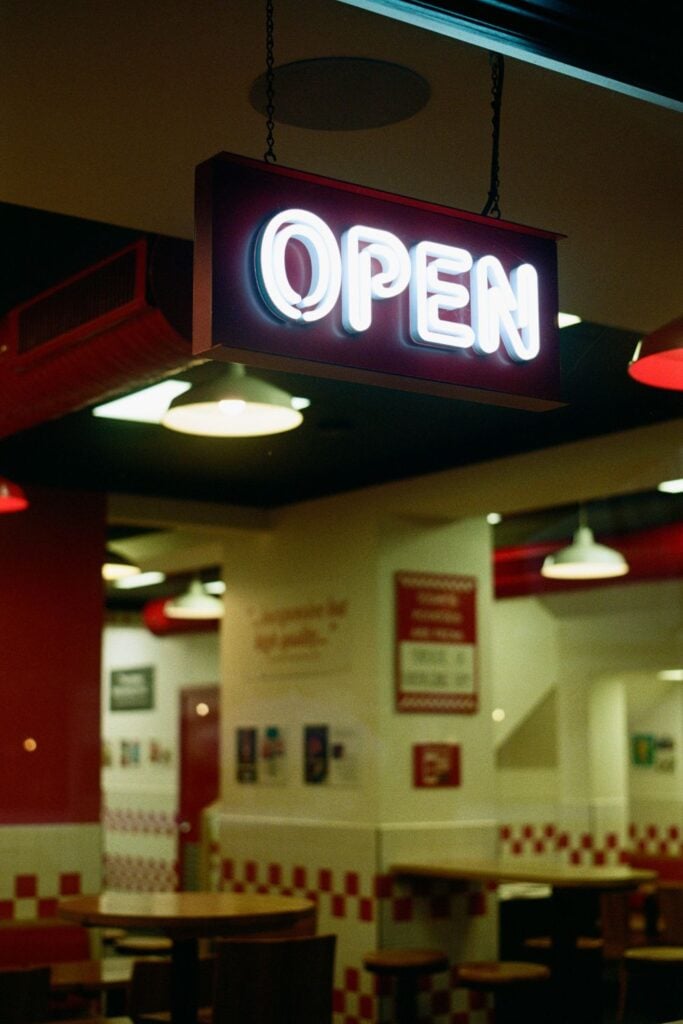
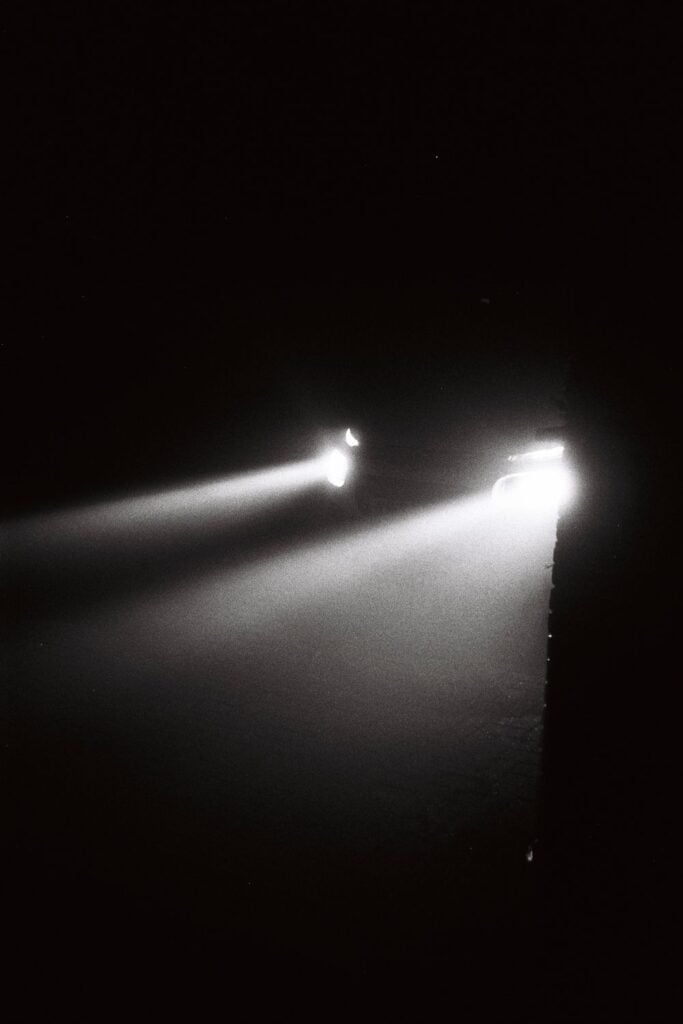
Start hunting for light sources such as street lamps, restaurant and bar signage. The most fun part of night photoshoots for me is looking for these light sources.
Film stocks such as Candido 800 and Cinestill 800T give a distinct red glow (halation) around light sources due to the removal of the remjet layer on the film emulsion.


5. Let the light meter tell you what to do
Lean on the internal light meter of your camera to do all the heavy lifting when deciding on camera settings. It can take some of the stress out of it all.
If you’ve got a point-and-shoot and it’s flashing lights at you like a tree at Christmas, you’ll probably want to use the built-in flash, unless you want some ‘artistic’ blur.

6. Don’t let a light meter tell you what to do!
Don’t like being told what to do by a light-tight box in your hands? Trust your gut when you know there is enough available light from the light source, not the whole scene.
Here’s an example of a scene below where I went with the light meter in my camera at one second and one after, where I defied it by shooting at 1/125.
Ilford HP5 pushed two stops. Left shot at camera metered 2 seconds and right image 1/125

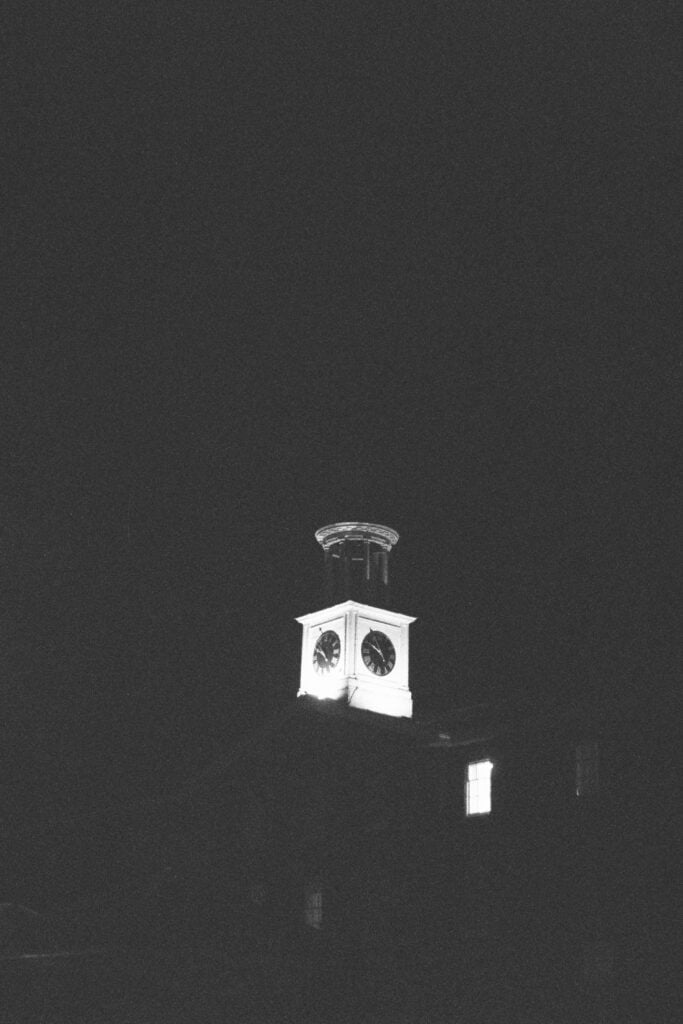
7. Take your snazzy filter off
Pro mist and CPL filters are cool, but they also cut out light; want more light? Take it off!
8. Remember your focal length
A general rule of thumb for hand-held shooting is that your shutter speed should be equal to or greater than the focal length of your lens.
So, if you’re shooting with a 50mm lens, you’ll want your slowest shutter speed to be as close to that number as possible, e.g. 1/60.
9. Find steady surface
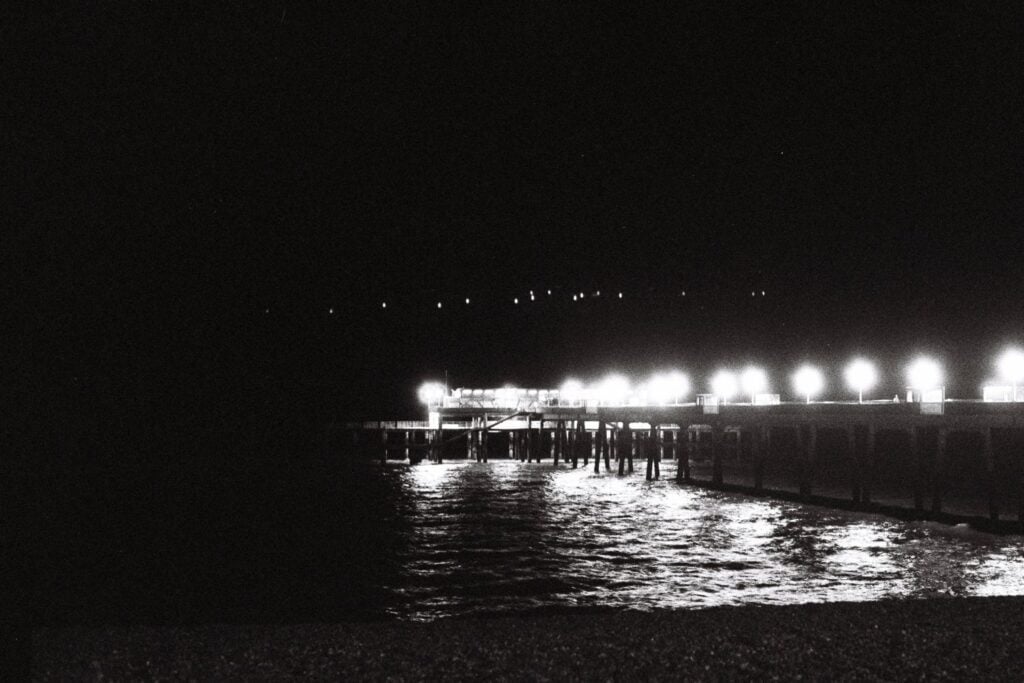
Tripod too much of a faff? Steady surfaces to rest on, such as roadside rails and sea walls, are handy tripod replacements.
You’ve still got to be careful pressing the shutter; if you move your camera slightly, you will get blurry images.
10. Be Brave (and hold your breath)
This actually works (sometimes); holding your breath can help you get away with a slightly slower shutter speed than your focal length.
I find this helps a lot when shooting slower film. With a point-and-shoot, remember to turn the flash off.
Other things to consider when shooting at night
- Stay Safe!
No photo is worth your safety; team up on night shoots with friends or family.
- Acceptance
Accept the limitations of your camera, lens and film stock when shooting in the dark. You might get some duds, but experimentation is all part of the fun.
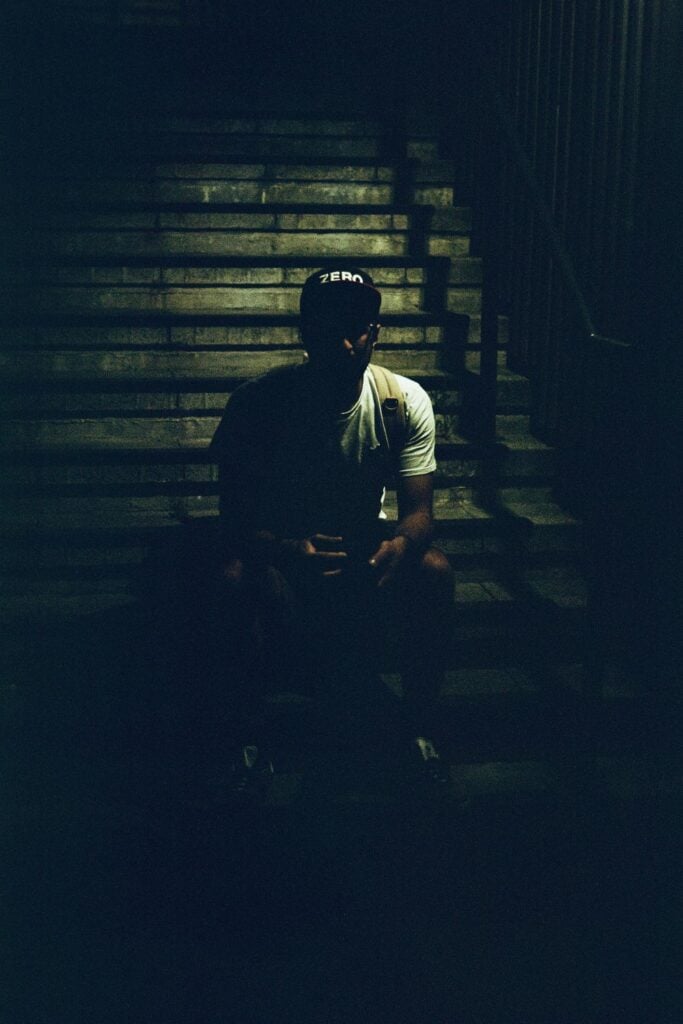
Shooting film at night can be exciting, daunting and sometimes a bit of a lottery without a tripod. However, when you do manage to nail that shot, the payoff can be so good, especially when you’ve managed it without lugging extra equipment around.
Let us know how you get on shooting at night in the comments—happy, lazy, night shooting everyone!